
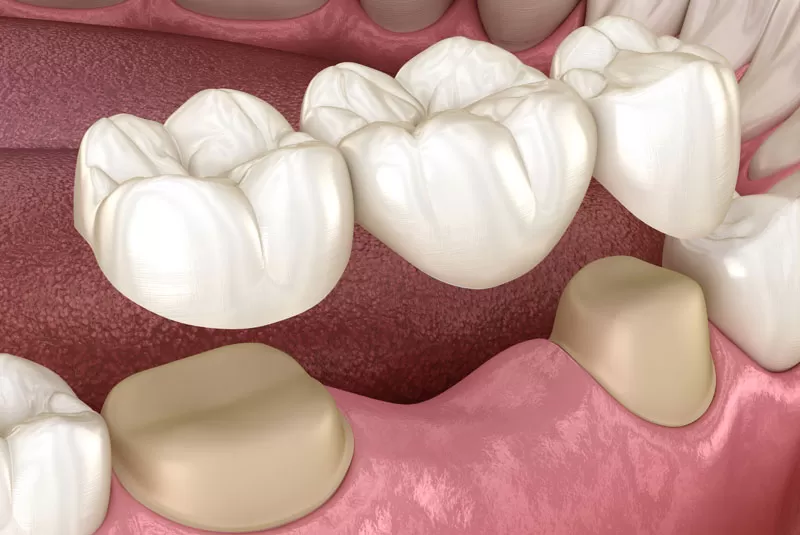

A missing tooth can affect more than your appearance, altering how you perform everyday oral functions. The structural integrity of your surrounding teeth and jaw may also be impacted over time if left unaddressed. A dental bridge is an available restorative option, and understanding what it involves can help patients make well-informed decisions about their oral health.
What Is a Dental Bridge?
A dental bridge is a fixed oral prosthetic used to replace one or more missing teeth. The appliance consists of two main components: abutments, which are the support structures on either side of the gap, and pontics, which are the artificial teeth that occupy the space left by the missing tooth or teeth. A dentist will assess multiple factors before recommending a specific type, including the number of missing teeth, the condition of neighboring teeth, and overall gum health.
When Should You Get One?
Dental bridges address the functional and structural consequences of tooth loss. When a permanent tooth is lost and the space is left untreated, neighboring teeth may gradually shift into the gap. This movement can lead to gum recession, bone deterioration, and bite misalignment over time. Beyond structural concerns, missing teeth may interfere with a patient’s ability to chew food properly or articulate when speaking. A bridge can restore both of these functions, and it provides a natural-looking result.
Dental bridges also serve patients who are not able to receive dental implants, as many factors prevent one from being a candidate for implants. They may be preferred by individuals who are simply seeking a less invasive alternative. Implants require surgical placement and a healing period of several months, but most bridge procedures can be completed across two appointments within a few weeks.
Bridges do carry certain limitations. The abutment teeth supporting the bridge can sustain decay or structural damage, and the bridge itself then becomes compromised. To keep both the bridge and the surrounding gum tissue in good condition, diligent oral hygiene is necessary.
What Should You Expect?
The dental bridge procedure typically spans at least two appointments, and there can be several weeks between them. During the first visit, the dentist administers local anesthesia and prepares the abutment teeth by removing a thin layer of enamel from their surfaces. Dental impressions are then taken and sent to a laboratory, where a technician fabricates the final bridge. A temporary bridge may be placed in the meantime to protect the prepared teeth.
Once the permanent bridge is ready, the patient returns for the second appointment. The dentist removes the temporary bridge, and they check the fit of the new one. They will then bond the permanent bridge into place if it is suitable. With proper care, a bridge can last many years.
Seek Professional Dental Services
A dental bridge is a practical option for patients dealing with one or more missing teeth, but determining whether it is the right course of action depends on a thorough clinical evaluation. A qualified dental professional can assess your specific situation, and they will outline what treatment is available for you. Scheduling a consultation is the appropriate first step for anyone who has been advised to explore restorative options.