
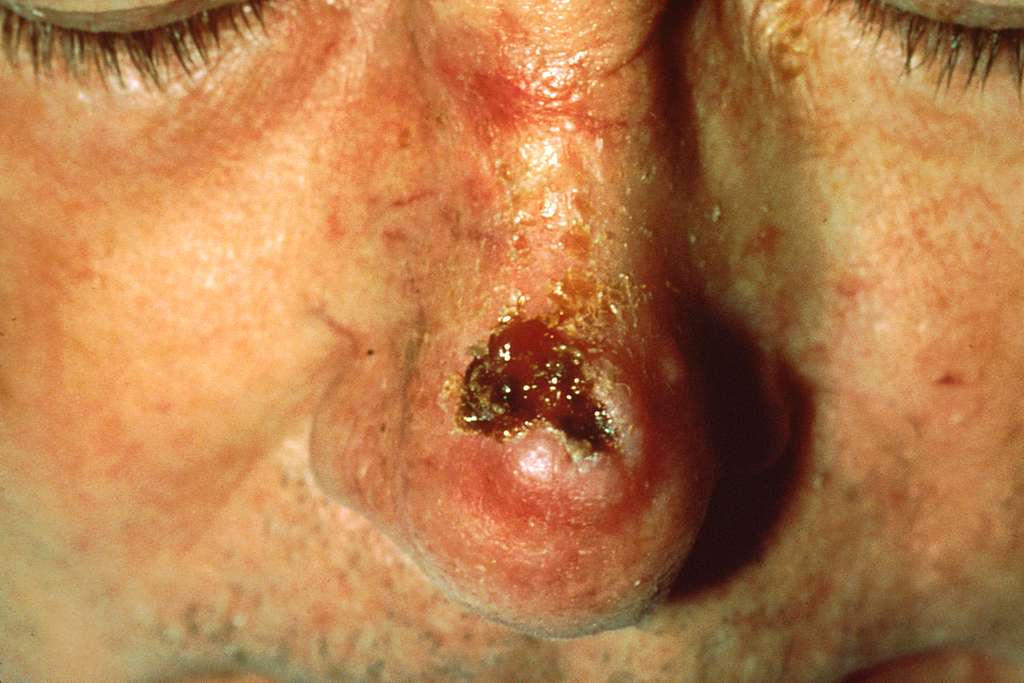

Squamous cell carcinoma begins in the flat cells near the outer skin surface, and this condition ranks among the common skin cancers in adults. Many cases relate to long-term ultraviolet exposure, and some develop in scars or patients with chronic conditions. When abnormal squamous cells grow beyond normal controls, a firm, scaly, or ulcerated lesion may appear. Risk increases with cumulative sun exposure, tanning bed use, age, personal skin cancer history, and reduced immune function.
Common Symptoms
Because early signs of squamous cell carcinoma can resemble other common skin conditions like eczema or psoriasis, skin changes that persist for several weeks should be reviewed in a clinic. A rough red patch on the skin may feel tender, itchy, or form a thick yellow or brown crust. An open sore may bleed with light contact, and the same spot reopens after healing. Careful notes on size, color, texture, drainage, pain, and date of onset help describe the change accurately.
Some tumors grow as raised nodules, and the surface could look wart-like, horn-shaped, pearly, or covered with adherent scale. If the cancer develops on the lip, typical eating and shaving can irritate the area and cause repeated cracking. Pain, rapid enlargement, numbness, firmness, or reduced motion can signal deeper growth near nerves or connective tissue. A lesion may crust after minor trauma, but repeated bleeding should be assessed by a medical professional.
Usual Locations
Squamous carcinoma often appears on sun-exposed skin, especially in people who spend a lot of time outside. Although any skin surface can develop this cancer, the face, ears, scalp, neck, shoulders, forearms, and backs of the hands account for many cases. The lower lip carries risk from sun and tobacco exposure, and genital or anal sites may relate to human papillomavirus infection or immune suppression. Because prior injury can alter local skin biology, long-standing areas with previous damage should be given attention during an exam.
Mohs Surgery
When a squamous cell carcinoma has high-risk features, Mohs surgery often fits the treatment plan after biopsy and lesion review. The surgeon removes a thin layer of tumor, and a laboratory team examines the tissue edges under a microscope. If the margins of the tissue have more cancer cells, the physician continues to remove very thin layers until the cancer cells are cleared. This staged method checks the surgical margin and creates a map of the treatment site.
Cancer cells may remain at an edge, and the surgeon removes another layer from that area. The map guides tissue removal from the site of concern. Because Mohs examines margin tissue in stages, doctors often use it for tumors in areas with limited spare skin. The appointment can take several hours, and repair planning depends on the final wound size, depth, and nearby structures.
Mohs surgery is one option among several standard treatments for this kind of cancer. If a tumor is small and low risk, standard excision, curettage with electrodesiccation, topical therapy for select superficial disease, or radiation may enter the discussion. Several factors affect the treatment choice, and biopsy details guide the final recommendation. When a cancer shows signs of spread, clinicians may add lymph node evaluation, imaging, radiation oncology input, or medical oncology input.
Schedule a Squamous Cell Carcinoma Evaluation
If you find a persistent skin abnormality, you should contact a dermatologist for an evaluation. There are many kinds of skin cancer, and they have different treatment methods and recommendations. Squamous cell carcinoma is often treatable, especially when it is caught early. Contact a dermatologist to schedule an appointment for a skin examination.