
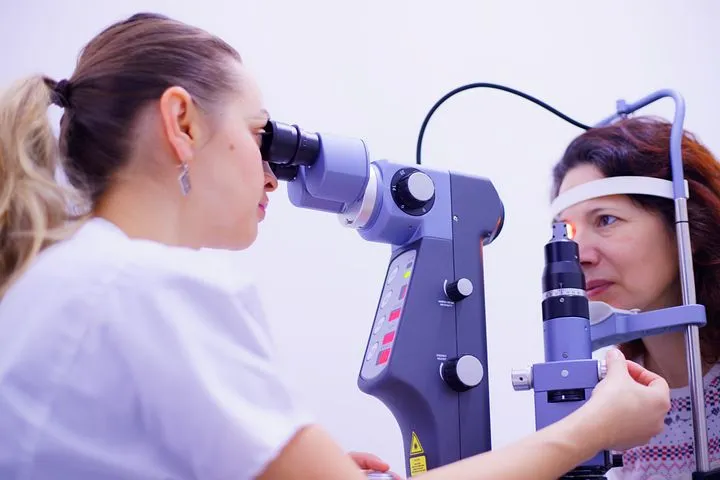

Eye exams are not all the same. Some check overall eye health and vision on a regular schedule. Others focus on diagnosing and managing specific eye diseases or symptoms. Knowing the difference helps clarify what each type of exam covers and when it might be needed. This guide explains the main types of eye exams, who they are for, and the conditions they can help identify.
Types of Eye Exam
There are two main categories of eye exam: routine exams and medical exams. A routine exam, also called a comprehensive exam, assesses overall eye health and vision. It is performed on a regular basis, much like an annual physical with a family doctor. It confirms that the eyes are seeing clearly and checks for issues that may need further attention.
A comprehensive exam often includes several standard tests. These may include a patient history, which covers current symptoms, medications, and family health history. Visual acuity testing measures how clearly each eye sees, usually using a reading chart. Preliminary tests may evaluate depth perception, color vision, eye muscle movement, and side vision. Refraction determines the lens power needed to correct nearsightedness, farsightedness, or astigmatism. The exam also includes an eye health evaluation, which may use dilating drops to widen the pupil and view the structures inside the eye.
A medical exam serves a different purpose. It is used to evaluate eye diseases and vision disorders. It assesses existing or previously diagnosed conditions and helps determine the cause of specific symptoms. A medical exam often includes the same tests as a routine exam, plus additional testing based on the symptoms present. This may involve a dilated exam or a staining agent to evaluate the tear film of the eye.
Who Needs Them
An eye exam is appropriate when specific symptoms appear. These can include eye pain, changes in central or peripheral vision, an excessive number of floaters, or other vision-related problems.
Recommended exam frequency depends on age and risk level. Certain risk factors, such as a family history of eye conditions or a previous eye injury, may call for more frequent visits.
What Do They Diagnose
An eye exam is used to diagnose and manage a range of specific conditions. These include glaucoma, age-related macular degeneration, macular dystrophy, and diabetic retinopathy. Exams also help identify cataracts, eye infections, and corneal ulcers or tears. They can assess traumatic damage to the eye and conditions such as dry eye.
One benefit of these exams is early detection. Many eye and vision problems have no obvious signs or symptoms, so a person may not know a problem exists. Early diagnosis and treatment can help prevent vision loss. Trained eye doctors can also identify risk factors and subtle signs that point to disease in its earliest stages.
Schedule an Appointment
Regular eye exams are part of caring for your eyes and your overall health. Whether you are due for a routine checkup or have noticed a specific symptom, an exam can give you an idea of your eye health. Schedule an appointment with an eye doctor to find the type of exam that fits your needs.
- Do I Need an Account to Use Manga Buddy?
- How to Find Information on Zavalio Com
- How to Determine If Online Information Is Reliable
- Coffee Manga Community for Manga Fans
- Droven.io Tools for Small Business Productivity
/