
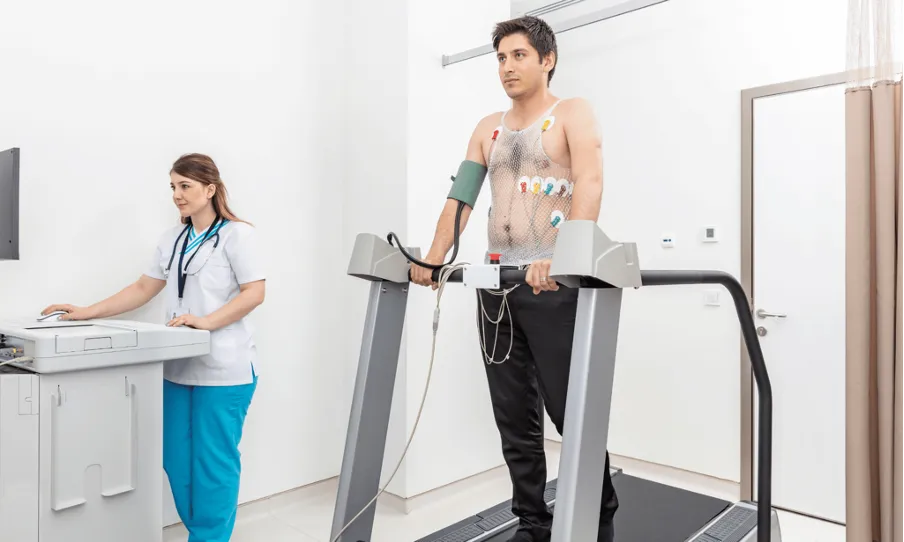

An exercise stress test measures how the heart responds during controlled physical activity performed in a controlled clinical setting. During the test, a physician records heart rhythm, blood pressure, oxygen levels, and other symptoms. These results can show how the heart handles increased demand, and they help the doctor understand a patient’s heart health. When used in cardiac rehabilitation, this test gives a structured baseline that helps doctors create treatment plans.
Initial Testing
Before a rehabilitation plan begins, the first exercise stress test often gives the care team data about heart function. The test follows a standard set of protocols. A patient may walk on a treadmill or pedal a stationary bike, and the workload increases while staff track heart activity, breathing response, and reported symptoms. This test usually lasts only a few minutes, followed by a few minutes of recovery monitoring.
The results can guide exercise intensity recommendations, and they can also identify limits that need attention during early rehabilitation sessions. If chest discomfort, unusual rhythm changes, or blood pressure concerns appear during testing, clinicians can adjust the starting treatment plan. The first test becomes a reference point for future planning. This test can also help with diagnosing heart disease that is difficult to detect when the patient is at rest.
Improved Results
Follow-up testing provides a comparison with the first test. When patients complete rehabilitation sessions and follow the prescribed plan, later results may show longer exercise time, improved workload tolerance, or a steadier blood pressure response. These changes can help clinicians review progress, and they can support decisions about exercise levels, medication discussions, or additional testing. If prescribed lifestyle changes and medications have had a positive effect, the results of any further stress tests should improve.
Continued Treatment
As cardiac rehabilitation continues, exercise stress test findings can shape changes in the treatment plan. Rehabilitation is not a single fixed program, and a patient’s response may change as endurance, strength, and symptoms shift. If test results show better tolerance or new limits, the care team can modify activity targets, rest periods, and monitoring needs. Changes in a rehabilitation plan are usually informed by test results.
Treatment adjustments may include changes to treadmill speed, bike resistance, session length, or target heart rate range. Clinicians track symptoms that accompany exercise and whether medications are working as intended. When a patient reports shortness of breath, fatigue, or chest pressure during daily activity, stress test data can help connect those reports with measurable cardiovascular responses. If the goal is to reduce cholesterol, additional testing may be administered to determine if improved exercise has helped to lower cholesterol levels.
Long-term planning also uses test results to support safer activity outside the rehabilitation setting. Patients may receive guidance for walking, cycling, stair climbing, or home exercise, and those plans can change when new data shows a different level of tolerance. Because cardiac status can shift over time, repeat testing may help detect patterns that routine visits do not show.
Schedule an Exercise Stress Test
For those who require cardiac rehabilitation, a stress test is a helpful method used by doctors to understand baseline heart health. These tests inform future treatment plans and provide a starting point for goal-setting. Contact a cardiology clinic to schedule an exercise stress test, and begin receiving treatment for your heart health needs.