
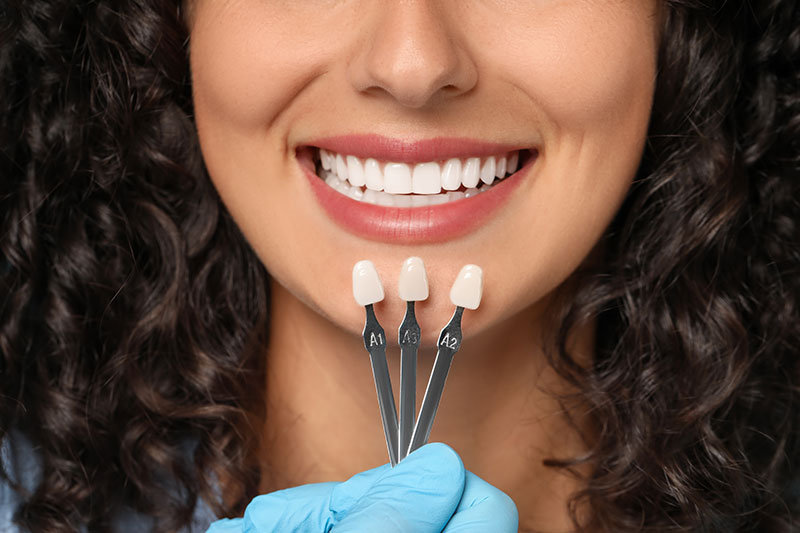

Veneers are thin shells placed on the front surface of teeth to change their appearance. They are often made from porcelain or composite resin, and each material has its own look, feel, and maintenance needs. Because they are shaped for each patient, veneers offer a flexible option for people who want targeted changes to their smile. Here is some information about the versatility of veneers in cosmetic dentistry:
Masking Stains
Some tooth stains resist whitening products. When medication use, injury, or prior dental work causes deep discoloration, repeated bleaching often fails to remove it completely. In such cases, veneers cover the front surface of the tooth, and they create a smooth, uniform appearance. A dentist will compare the color of nearby teeth before selecting the veneer shade. This helps the restoration blend with the rest of the smile instead of standing out.
Porcelain veneers are often chosen for stain masking because they reflect light in a way that resembles natural enamel. Composite veneers may also be used, but they wear differently over time. The choice depends on the shade involved, the number of teeth being treated, and the patient’s goals.
Correcting Misshapen Teeth
Misshapen teeth affect both the appearance and functionality of a person’s smile. A tooth may appear too short, too narrow, uneven along the edge, or slightly worn down. Veneers change the visible shape of a tooth by adding carefully designed material to the front. Small size differences between neighboring teeth are adjusted this way, and minor surface irregularities can also be hidden. Treatment planning matters here. If one front tooth has a different contour than the tooth beside it, the dentist studies width, length, and symmetry before preparing the veneer. Even a small adjustment in edge length or corner shape can alter the smile’s overall appearance.
Reducing Gaps
Gaps between teeth vary in size and cause; some are part of natural spacing, and others develop as teeth shift. For small spaces, veneers may reduce visible gaps by widening the treated teeth. This approach works when the space is limited, and the final tooth proportions still look natural. In some cases, closing a gap with veneers on a single tooth can look uneven. Treating two or more teeth may create a more proportional result. That is one reason veneer planning involves more than the space itself. The dentist also examines:
- Gum line height
- Bite position
- Tooth appearance when speaking and smiling
Customizing Results
Customization is key in cosmetic dentistry, and veneers are designed with precision for each patient. Each one should align with a patient’s tooth size, facial features, and treatment goals. The final plan may involve one or several teeth, depending on the issue being addressed.
Shape, shade, translucency, and surface texture all play a role. A brighter shade may suit one patient, while another wants a finish that matches the surrounding enamel with little contrast. While some patients prefer a more rounded look at the edges, others want a straighter, more polished appearance.
Material choice also affects the result. Porcelain often offers a refined surface and strong color stability, but a composite typically allows for quicker adjustments. A detailed consultation helps define which features matter most before treatment begins.
Learn More About Veneers
Veneers are used for several cosmetic goals, including masking stains, reshaping teeth, and refining overall symmetry. Their versatility comes from the fact that each restoration is designed for a specific tooth and visual outcome. To learn whether veneers are right for you, schedule a consultation with a cosmetic dentist today.