
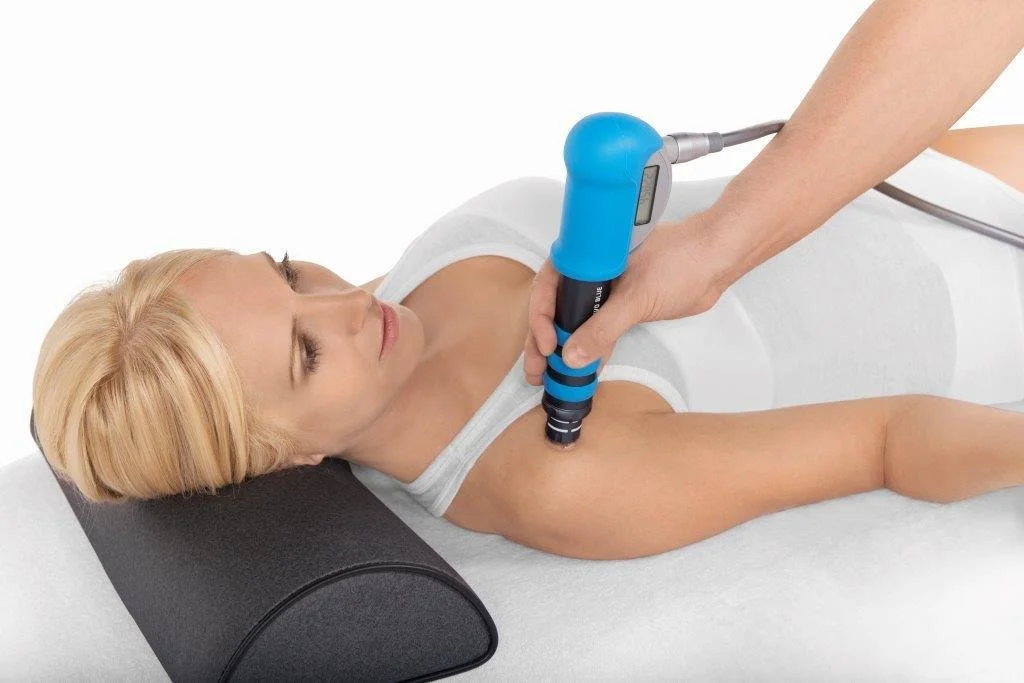

Shockwave therapy uses focused acoustic waves to act on injured soft tissue and bone-related structures. Clinicians apply it in outpatient settings, and practitioners use it to manage injuries and help reduce pain. Because shockwave pulses transfer energy into tissue, they alter cell activity and signaling rather than relying on heat or medication. This therapeutic method can accelerate healing and improve patient outcomes.
How It Works
During a shockwave therapy session, a generator creates pressure waves, and a handheld applicator directs them into a selected treatment area through the skin. The applicator moves across the skin using a specialized gel to reduce friction. When waves enter tissue, they produce rapid compression and tension forces that disturb the environment at the microscopic level. Because tendons, fascia, and other connective tissue contain sensitive structures, the incoming pulses can change membrane signaling and ion movement.
These methods cause fluid to move around the joint and tissue, and those events add another layer of treatment for injuries. Using energy waves helps the cells regenerate and function as intended. Blood flow patterns may shift after treatment, and local nerve signaling can also change over time. Depending on the condition, inflammation, pain signaling, and cell regrowth can all occur using shockwave treatment.
What It Treats
Clinicians use shockwave therapy for several musculoskeletal disorders, and most use cases involve persistent pain tied to tendon or fascia overload. Plantar fasciitis is a common target. Because the therapy acts through mechanical stimulation, it is often used for problems in which tissue repair has stalled or calcific deposits affect motion.
Common examples include tendon pain in the feet and legs, and calcium deposits found in joints like the shoulder or hip. Some clinics also use it for muscle pain in large muscle groups. When symptoms last for months and standard approaches do not provide relief for them, shockwave therapy may be implemented into the treatment plan. This kind of treatment is intended to improve mobility and reduce inflammation.
Bone-related applications also exist, and specialists sometimes use the technology in delayed bone healing or other select orthopedic cases. The use of shockwaves depends on the diagnosis provided by a physician. Since pain and function outcomes often improve after treatment, method selection depends on imaging, examination, and symptom duration.
What to Expect
Before treatment begins, a clinician first reviews symptoms, prior treatment, and the suspected tissue source. Then, the clinician selects settings on the machine based on the depth and location of the injury. Treatment sessions are usually quick. If the applicator passes over an irritated structure, the pulses can produce a tapping sensation in the patient. If the sensation is uncomfortable, the patient should notify the clinician immediately.
Many treatment plans involve a series of sessions, and the schedule varies by diagnosis, energy level, and response between visits. Some soreness can follow treatments. Because exercise patterns affect recovery after the session, clinicians often pair the procedure with changes in exercise, impact activity, or sport participation.
Learn More About Shockwave Therapy
Shockwave therapy is one tool within musculoskeletal treatment options, and its role depends on diagnosis, tissue type, and the goals of treatment. This method can help reduce inflammation and pain, and it can increase mobility. If other options have not provided results, consult a physical therapy office to begin shockwave therapy.