
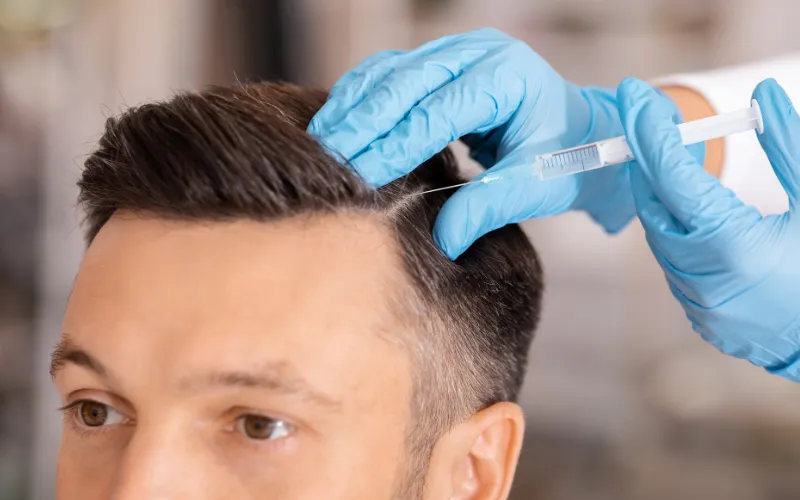

Platelet-rich plasma (PRP) hair restoration uses a sample of your blood, and a clinician processes it to isolate specific components. The plasma contains growth factors, and these proteins support normal tissue repair. Since hair follicles depend on blood flow and cell activity, PRP aims to support those functions. Here are some of the benefits of PRP hair restoration techniques:
Thicker Hair
Hair typically looks thinner when follicles shrink, and the growing phase becomes shorter. PRP hair restoration treatment targets the scalp. Since platelets release signaling proteins, the treatment may support follicle activity in thinning areas. Some patients notice fuller coverage over time, and others track changes with photos.
Density and strand quality both affect how hair looks, but density typically draws the most attention first. When follicles receive stronger biological support, some hairs may grow with better diameter and improved texture. That change does not happen at the same pace for every person, and results vary by age, pattern, and scalp health. A treatment plan may include:
- Initial series of visits
- Follow-up maintenance sessions
Improved Circulation
Hair follicles need oxygen and nutrients, and blood vessels deliver both to the scalp. Better circulation supports normal follicle function. Since PRP places growth factors near the treatment area, clinicians use it to support the local environment around weakened follicles. This effect relates to scalp health as much as visible hair changes.
Reduced Hair Loss
Many patients seek PRP because they notice more shedding in the shower, and more hair on brushes or pillows. Reduced daily loss is often a practical goal. Since excessive shedding may reflect stressed follicles, treatment focuses on supporting the growth cycle rather than masking the issue. Providers also rule out thyroid problems, anemia, hormone shifts, and scalp disease.
Hair loss has many causes, and pattern matters during evaluation. PRP does not replace diagnosis. When a clinician identifies androgenetic alopecia or mild diffuse thinning, PRP may fit into a broader care plan. That plan may include lab work, topical therapy, or changes in hair care routines.
Some people hesitate because progress takes time, and repeated visits require planning. That concern is reasonable. Since follicles respond slowly, visible changes may take several months, and shedding may not drop right away. Clear expectations help patients judge progress more accurately.
Natural Approach
PRP uses material from your own blood, and that feature appeals to patients who prefer a less synthetic option. The process stays simple. Because the treatment uses autologous plasma, the risk of allergic reaction remains low. A clinician still reviews your history, medications, and scalp condition before treatment.
This approach does not involve surgery, and most sessions take a short office visit. Recovery is typically brief. When patients want a step between home products and procedural hair restoration, PRP offers a non-surgical option. It fits best when a provider matches it to the right type of thinning.
Schedule PRP Hair Restoration Today
PRP hair restoration focuses on follicle support, and it addresses several parts of scalp health. It may help with hair thickness, circulation, shedding, and treatment planning. As outcomes differ by person, a medical evaluation gives the most useful starting point. Schedule a PRP hair restoration consultation today to review your hair loss pattern and discuss next steps.