
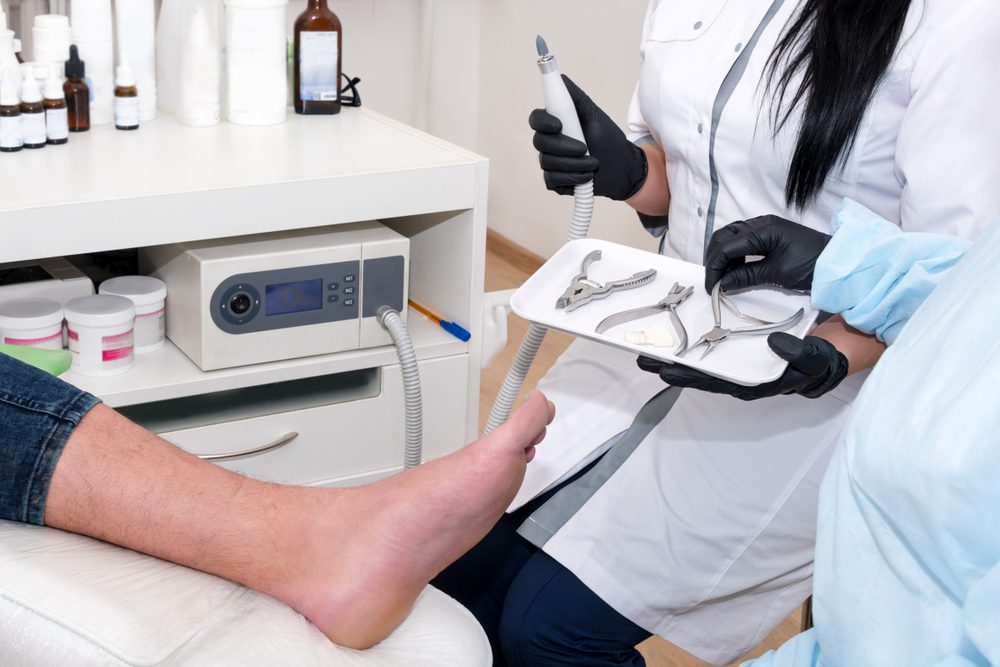

Ingrown toenails are a common foot condition that affects adults. They can progress to infection, and they will then require professional intervention. Understanding the range of available treatment options, from at-home management to clinical procedures, helps patients make more informed decisions about their care.
What Are Ingrown Toenails?
Ingrown toenails develop when the edge of a toenail curves downward and grows into the surrounding skin, rather than over it. The big toe is the most commonly affected digit. The nail can penetrate the skin, and the area typically becomes red, swollen, and warm to the touch. Discomfort or pain at the nail border is a frequent complaint. An ingrown toenail can become infected if left unaddressed. Signs of infection include pus drainage and an unpleasant odor at the site where the nail has punctured the skin.
What Causes Them?
Ingrown toenails develop for a variety of reasons, and identifying the underlying cause can inform both treatment and prevention. Improper nail trimming is the most frequently cited cause. Cutting nails too short or in a rounded shape allows the surrounding skin to fold over the nail edge, which can redirect nail growth into the skin.
Ill-fitting footwear is another contributing factor. Shoes that are too short or too narrow compress the toes, and this pressure may push the nail into the surrounding tissue. Trauma to the toe, such as stubbing it, dropping an object on it, or kicking something with force, can alter the normal growth pattern of the nail.
Underlying nail conditions, such as toenail fungus, may weaken the nail structure. This weakness increases a nail’s susceptibility to becoming ingrown. There is also a hereditary component; some individuals inherit a predisposition to ingrown toenails regardless of their habits or footwear choices.
How Are They Treated?
Treatment options for ingrown toenails fall into two broad categories: non-surgical approaches and surgical interventions. The appropriate course of action depends on the severity of the condition, and more invasive methods may be used if infection is present. Simple at-home management can help prevent these complications from developing.
Non-Surgical Treatments
For mild to moderate cases without signs of infection, non-surgical management is typically the first line of care. At-home self-care may provide relief in early-stage cases. Soaking the affected foot in warm, soapy water for around 15 minutes a few times per day can reduce swelling and soften the surrounding tissue, and wearing open-toed shoes or sandals during this period minimizes pressure on the nail. When at-home measures are insufficient, a podiatrist may need to employ treatment.
Surgical Treatments
Surgical options can be recommended when conservative measures have been unsuccessful, or they are explored when the ingrown toenail is severe or when infection is present. Partial nail removal is a common procedure. After administering a local anesthetic, the provider removes the ingrown portion of the nail. Nail regrowth following this procedure typically takes a few months. Nail and tissue removal is reserved for cases in which ingrown toenails recur on the same toe. This procedure involves removing a section of the nail along with a portion of the underlying nail bed. If infection is present, a podiatrist may also prescribe oral antibiotics as part of the overall treatment plan.
Seek Professional Foot-Based Care
Ingrown toenails are a manageable condition, but the risk of infection makes self-treatment an unreliable long-term strategy for many patients. Preventive measures, such as trimming nails in a straight line, can reduce the likelihood of recurrence. Patients who experience repeated cases on the same toe may benefit from a consultation with a podiatrist to discuss more effective treatment options.