
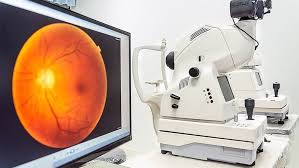

Technology has changed what a routine eye appointment can accomplish. Ophthalmologists now gather more precise data, coordinate care across settings, and manage records with greater speed and accuracy. Each of these shifts reflects a broader pattern in how ophthalmology practices operate today. The three areas covered here — evaluation, imaging, and documentation — show where that change is most visible.
Ophthalmologists Evaluation
Good care starts with a thorough assessment. Ophthalmologists provide comprehensive eye exams alongside medical and surgical services, including cataract and glaucoma treatment, all of which depend on accurate baseline data collected at the point of care. Physicians review findings with patients directly, offering straightforward information about results, treatment options, and next steps. Coordinated follow-up is built into the process, so care does not stop at the appointment itself. What patients receive at each visit reflects a structured approach. The physician gathers objective measurements, and those measurements inform every decision that follows. A complete evaluation — whether routine or medical — gives the care team reliable data to work from, and it gives the patient a clear picture of their eye health.
Imaging
Optical coherence tomography, known as OCT, is one of the most significant tools now available in clinical eye care. It produces detailed cross-sectional images of ocular tissue, and ophthalmologists use it to assess macular disease, optic nerve disease, and corneal disease in a single session. These three conditions are among the leading causes of vision loss in older adults, making accurate imaging a priority in managing them.
The technology does more than generate images. OCT data allows physicians to monitor changes over time, compare findings across visits, and detect early signs of disease progression. A patient who once tracked symptoms with a basic paper grid at home may in the future use a modified OCT device independently, sending data directly to their care team. Clinical judgment remains the center of the process; the imaging technology extends what the physician can observe and measure.
Artificial intelligence now supports image analysis as well. AI algorithms analyze retinal scans and OCT outputs with high precision, identifying patterns associated with diabetic retinopathy, glaucoma, and age-related macular degeneration. The first FDA-cleared AI device for detecting diabetic retinopathy received authorization in 2018 and is now deployed across more than 60 health systems.
Documentation
Administrative systems have changed alongside clinical tools. Natural language processing software transcribes exam-room conversations directly into the electronic health record, generating notes, orders, and prescriptions without requiring the physician to step away from the patient. Accurate records are produced faster, and the risk of documentation errors decreases. The physician gains more time for direct patient interaction, and the practice runs more efficiently as a result.
AI-driven systems also automate insurance workflows. They verify eligibility, process claims, and flag billing discrepancies without manual entry at each step. This reduces the administrative burden on staff, speeds reimbursement, and keeps records consistent across visits. A practice that processes claims more accurately spends less time on corrections, and patients receive cleaner billing statements. Documentation technology does not operate independently of clinical care. The records it produces feed into the evaluation and imaging cycle, giving ophthalmologists a longitudinal view of each patient’s eye health over time.
Find an Ophthalmologist
Technology now touches every part of ophthalmology care — from the first exam to post-visit documentation. Patients receive more detailed evaluations, ophthalmologists access more precise diagnostic data, and administrative processes move with less friction. The combination of imaging tools, AI-supported analysis, and smarter record systems allows practices to deliver more accurate, accessible care. At your next appointment, ask your ophthalmologist which of these tools are part of your care plan.