
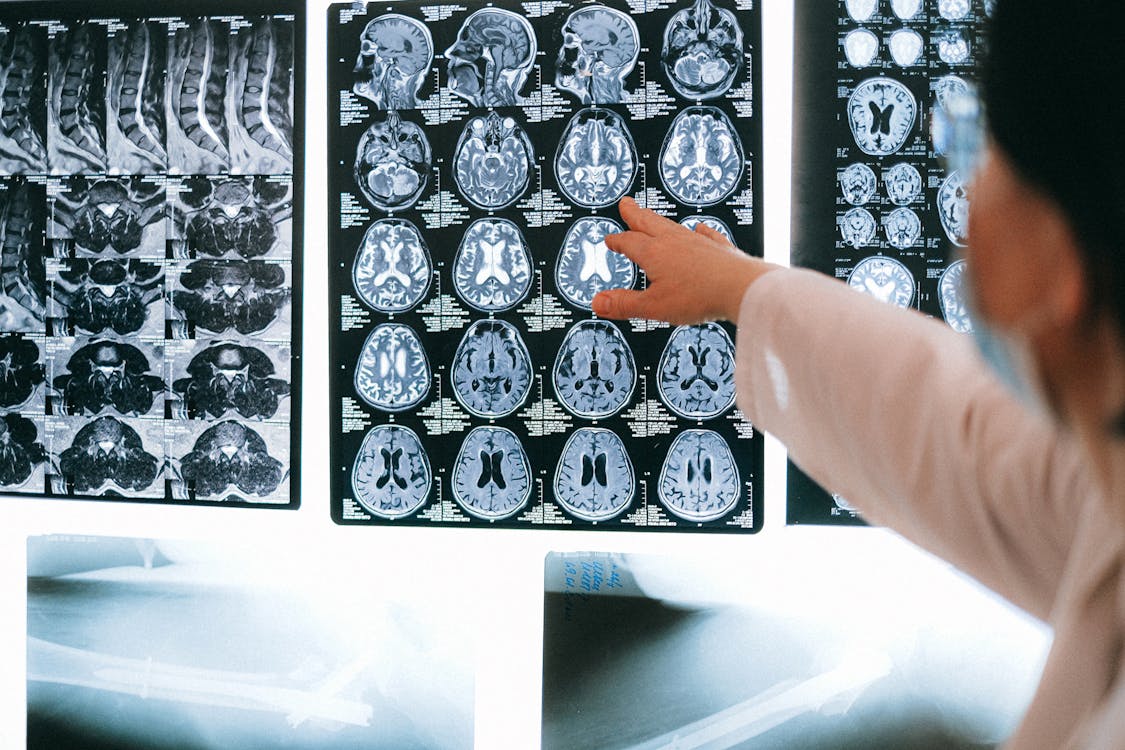

Neurologists diagnose disorders such as dementia, epilepsy, memory loss, movement disorders, tremors, stroke, multiple sclerosis, neuropathy, vertigo, and sleep disorders. They use advanced MR neuroimaging to study the nervous system; these methods add detail that standard assessment alone does not provide. Neurological disorders affect structure, blood flow, and tissue composition in different ways. Imaging helps clinicians compare patterns across the brain and spinal cord, and those findings support diagnosis.
Mapping Brain Structures
Advanced MR methods show brain structure in greater detail. Neurologists review spinal cord quantitative MRI, and standardized analysis supports the study of spinal cord pathologies. When specialists examine visual white matter pathways with diffusion MRI and tractography, they assess structural organization across pathways such as the optic nerve, optic tract, and optic radiation; those findings help clinicians compare normal and abnormal patterns.
Magnetic susceptibility source separation distinguishes diamagnetic and paramagnetic sources, and that distinction helps separate signals linked with myelin and iron. Standard MRI shows broad anatomy. Techniques such as DTI-ALPS also examine diffusion along the perivascular space. The reviewed literature describes its use in studying cerebral interstitial fluid dynamics and neurodegenerative disease.
Measuring Blood Flow
Arterial spin labeling measures cerebral blood flow. It is a noninvasive MRI technique; the reviewed article describes progress toward broader clinical use. Because blood flow changes across neurological conditions, neurologists use ASL findings with other imaging results; that combined view supports diagnostic evaluation in disorders that affect perfusion.
MRI also supports the study of brain oxygen metabolism. Researchers describe methods based on blood oxygen level-dependent imaging and quantitative susceptibility mapping, and those methods quantify the metabolic rate of oxygen in the brain. When neurologists review metabolic imaging with structural findings, they gain more information about brain metabolism; that approach supports assessment of metabolic and neurological disorders discussed in the source literature.
Improving MRI Quality
Deep learning-based image enhancement improves MRI workflows. These methods support faster scans and image reconstruction, and the review links them to better image quality in neuroimaging. Although the source frames these tools as imaging advances rather than standalone diagnoses, neurologists use improved images in routine interpretation, and shorter scan times may also improve the patient experience during imaging.
Faster processing also supports more efficient imaging workflows in clinical settings, and clearer images give neurologists more detailed information during diagnostic review.
Radiomics evaluates quantitative features within medical images. It extends analysis beyond macrostructure, and the source discusses its role in neuroimaging research related to neurodegenerative disorders. When clinicians and researchers combine radiomic features with MRI and histopathology data, they study imaging patterns in greater depth, and the review identifies that multimodal approach as a direction for biomarker validation. Researchers also continue studying how quantitative imaging data may contribute to future diagnostic and monitoring methods in neurology.
Meet with Neurologists
Advanced imaging gives neurologists multiple ways to study structure and function. The methods reviewed in the source literature cover myelin, white matter pathways, spinal cord changes, blood flow, radiomic features, and oxygen metabolism, and each method adds a different type of diagnostic information. Neurologists compare imaging findings with the patient’s condition and reported symptoms. This process helps guide evaluation across a range of neurological disorders. Meet with neurologists in your area to learn more.