
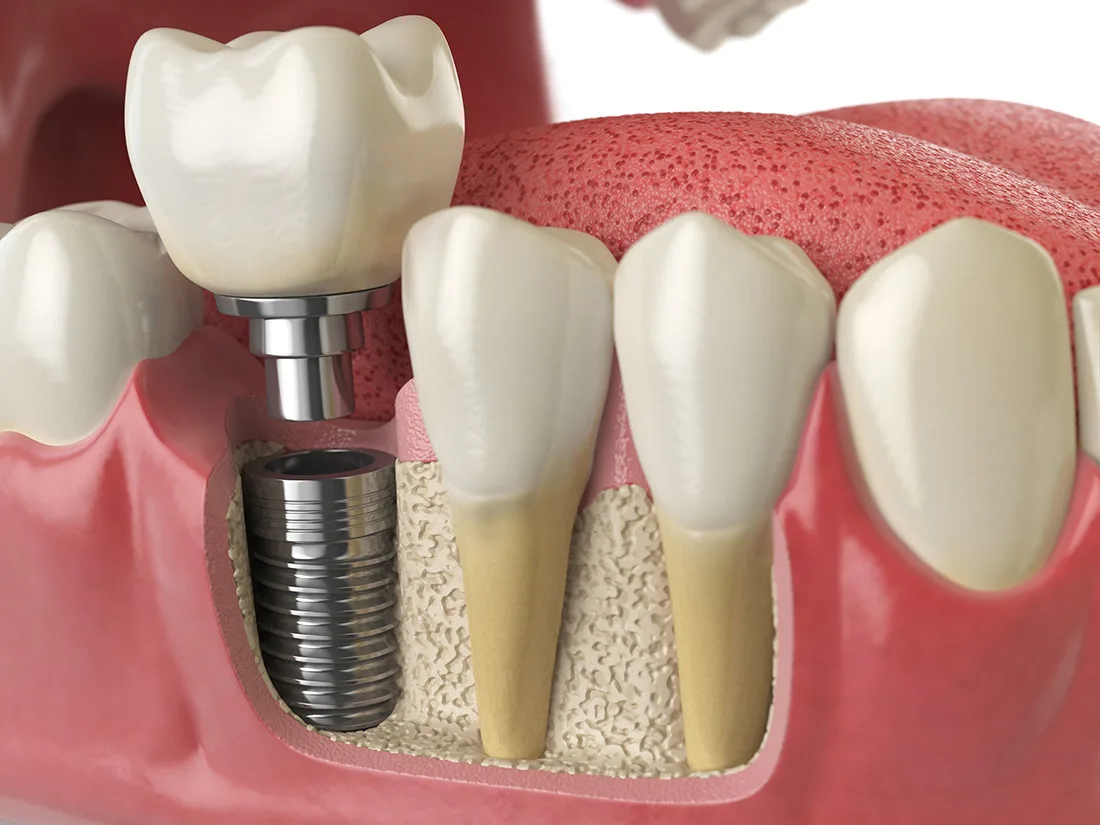

Dental implants are dental devices used to replace missing tooth roots. They include a titanium post placed into the jawbone, where it serves as a base for a replacement tooth. The visible part is shaped to look and function much like a natural tooth, and it blends with surrounding teeth. Here are some reasons dentists use dental implants:
Replacing Missing Teeth
A primary use of dental implants is replacing missing teeth. When a tooth is lost, the visible crown and the root are both gone. A dental implant replaces the root by placing a titanium post into the jawbone, and a crown, bridge, or denture can be attached to the implant. This approach is different from a traditional bridge because it does not rely on neighboring teeth in the same way. In many cases, the implant serves as the anchor for the replacement tooth. This makes it a common option for single-tooth replacement.
Implants are also used when several teeth are missing; multiple implants may support a dental bridge or a denture. These restorations stay in place during normal use and do not shift or slip like removable dentures. Since they are fixed or secured to implants, they are often more stable during speaking and eating.
The replacement tooth is designed to blend with nearby teeth in size, shape, and color. Though it is not a natural tooth, it is made to look similar. Routine cleaning is still needed, and implant-supported crowns should be brushed and flossed.
Preserving the Jawbone
Maintaining the health and structure of the jawbone is key for long-term oral health and function. The jawbone needs stimulation from tooth roots during biting and chewing. When a tooth root is no longer present, the bone in that area may begin to change over time. A dental implant replaces the missing root structure with a titanium post. This post integrates with the jawbone, and it provides the necessary stimulation for bone preservation. Because the post is placed in the jawbone, the amount of bone present impacts treatment planning. Not every person has enough bone for an implant at the start, so a dentist may discuss bone grafting or other procedures before implant placement. These details depend on an exam, dental images, and health history. A personalized evaluation helps the dental team decide whether implant treatment fits the patient’s situation.
Enhancing Chewing and Speech
A missing tooth can change how a person bites. Nearby teeth often shift, and chewing pressure moves to other areas. Replacing the missing tooth with an implant-supported crown, bridge, or denture helps restore a more balanced chewing surface. Dental implants are used to support restorations that stay in place while a person eats. Since implant-supported teeth do not slip like loose dentures, they help make chewing more controlled.
Speech may also be part of the discussion. Teeth guide the tongue and lips during certain sounds. When teeth are missing or dentures move, speech is typically affected. Implant-supported teeth may provide added stability, and this supports clearer speech.
Learn More About Dental Implants
Dental implants replace missing tooth roots, support replacement teeth, and help restore chewing surfaces. Like natural teeth, they are cleaned daily, but they still require regular dental care. During routine dental exams, your provider will evaluate bone health and discuss restoration options. With proper care, implants can be a long-lasting and stable solution for tooth replacement. Contact a dental office today to request a consultation.