
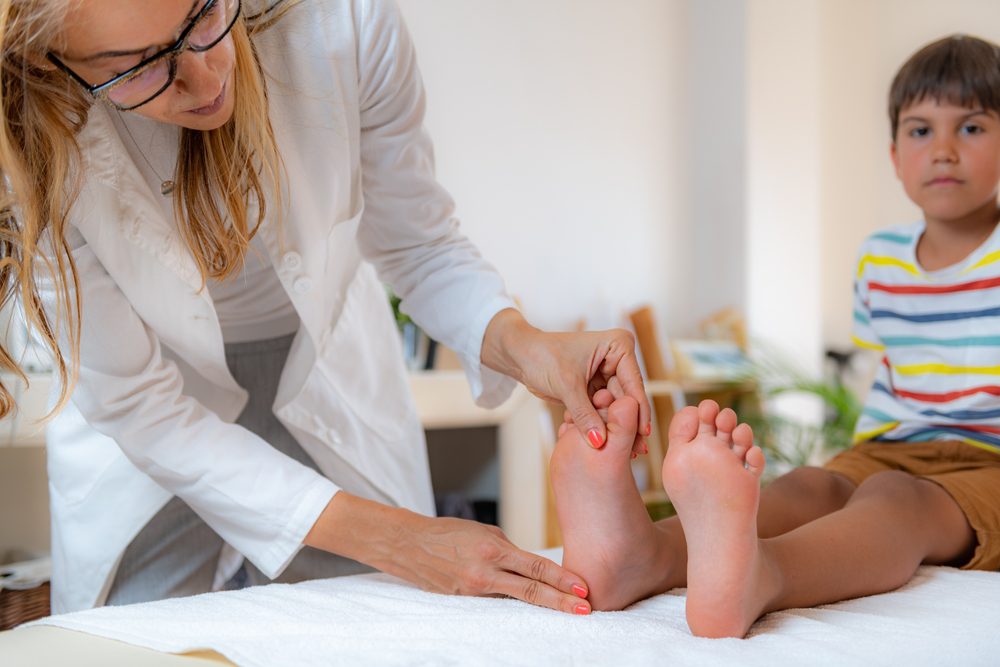

Children’s feet grow fast, and the bones, muscles, and ligaments inside them are still forming. Orthotics are custom or prefabricated inserts placed inside shoes to support and guide the foot’s structure. They work by repositioning the foot during walking, standing, and running. Here is more information on how orthotics help to improve the development of kids’ feet:
Alleviating Pain
Children may struggle to describe foot pain clearly. They may say their legs are tired, refuse to walk long distances, or stop participating in physical activity. Orthotics are used to reduce pressure on specific points of the foot, and this relief often shows up quickly in a child’s willingness to move. Pain that comes from structural imbalances responds well to proper foot positioning.
Heel pain is typical in active kids who are involved in sports. The growth plate in the heel becomes inflamed from repeated stress. Orthotics with heel cushioning absorb shock and reduce strain on the growth plate. Physical activity typically becomes more manageable when the heel has proper support underneath it.
Aligning Bones
Foot bones in children are partially made of cartilage, and they harden over time. When a child’s foot rolls inward, the bones shift out of their natural position, and the ankle begins to tilt. Orthotics place a firm barrier under the arch, which guides the heel and midfoot into proper alignment. This early correction matters because misaligned bones affect how the knees, hips, and lower back develop.
Flatfoot is one of the more common alignment issues in children. The arch collapses under body weight, and the bones of the midfoot press downward. A rigid or semi-rigid orthotic lifts the arch and holds the foot in a neutral position. Over time, this support gives the foot’s developing structure a better pattern to follow.
Children with conditions like clubfoot or metatarsus adductus often need orthotics alongside other treatments. The foot bones are malleable at a young age, so orthotics applied early can redirect bone growth. Consistent use throughout growth spurts gives the best chance of lasting alignment. A pediatric specialist assesses the severity before recommending a device.
Correcting Structure
Structural problems in children’s feet show up in different ways:
- High arches that put pressure on the heel and ball of the foot
- Low arches or flatfoot that strain the ankle ligaments
- In-toeing or out-toeing caused by foot or leg rotation
Orthotics address these issues by changing how the foot sits inside the shoe. A custom device molds to the exact shape of the child’s foot, and it redistributes pressure across the sole. When the structure is corrected early, the muscles surrounding the foot develop stronger patterns of movement.
Improving Balance
Balance depends on how well the foot communicates with the rest of the body. When the foot sits in a neutral position, the muscles in the leg and core activate more efficiently. Orthotics help achieve that neutral position, and better foot placement leads to steadier movement. Children who struggle with balance may trip frequently or avoid uneven surfaces.
Schedule a Visit for Orthotics
Orthotics offer children a structured way to support healthy foot development. They address alignment, correct structural irregularities, reduce pain, and improve how kids move through daily activities. The right device depends on the child’s age, foot shape, and specific condition. Contact a pediatric foot specialist today to get a full assessment of your child’s foot development and find out if orthotics are the right fit.