
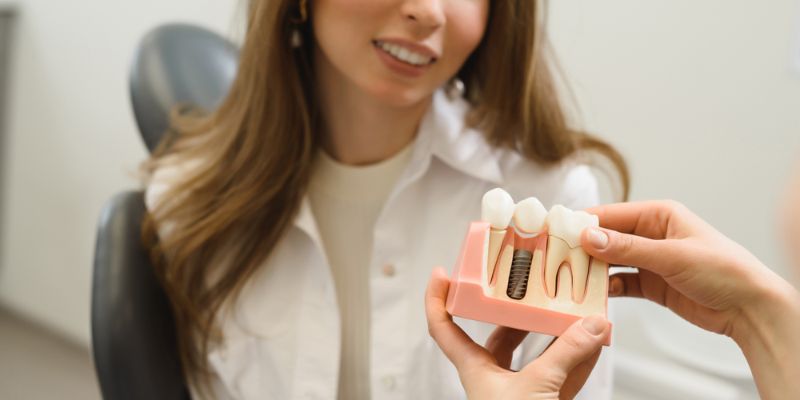

The practice of tooth replacement possesses a lengthy history within the medical field, but the modern modality is established with the foundational concept of osseointegration. This physiological process involves the attachment of dental implants to the surrounding bone. In current clinical settings, dental implants provide a thoroughly documented method for treating edentulism.
What Are Dental Implants?
Dental implants are structural devices placed directly within the jawbone to replace lost teeth. These devices provide foundational support for fixed or removable dental prostheses, including crowns, bridges, and dentures. Manufacturers construct them out of titanium. Titanium and its alloys are bioinert and allow for direct rigid attachment. Practitioners primarily use endosteal implants, which take a root-like form and act very similarly to natural teeth.
What Is the Process?
The placement of these restorative devices involves a meticulous, multi-stage clinical approach. Timelines vary based on an individual patient’s anatomical conditions and physiological healing capabilities. The procedure begins with a comprehensive consultation and radiographic assessment. Dentists utilize imaging technology, such as X-rays or CT scans, to evaluate existing bone density. This imaging phase helps practitioners understand a patient’s anatomical structure and prevent nerve or tissue injury during surgery.
The surgical phase commences following the assessment. With the patient under some form of anesthesia, the practitioner creates a small osteotomy in the jaw and inserts the titanium rod. After the initial surgery, a healing phase of three to six months begins, and osseointegration occurs as the surrounding bone tissue fuses securely with the titanium surface. Once integration is complete, the patient undergoes a secondary procedure to attach an abutment. The abutment functions as a connector between the embedded titanium root and the final prosthetic crown. Following a brief recovery period, the dentist places the permanent restoration.
Why Should You Receive This Care?
Patients receive several functional and structural advantages from this restorative option. The treatment offers notable longevity. While conventional bridges or removable dentures may require periodic replacement, integrated titanium structures can last for decades under proper maintenance conditions. The visible prosthetic crown matches the surrounding natural teeth, and the titanium base remains hidden. The installation process also leaves adjacent healthy teeth intact.
These devices provide significant strength and stability. Because the titanium fuses directly to the human skeleton, the prosthetic behaves similarly to a natural tooth, remaining solid during mastication. Patients can consume a regular diet and not adhere to the restrictions associated with removable prosthetics.
From an anatomical perspective, replacing a missing root halts the natural process of bone loss. An anchored titanium post restimulates the surrounding bone tissue. This stops the body from reabsorbing bone in the edentulous area and prevents jaw shrinkage.
Consult a Dental Expert
Prospective candidates must undergo a thorough medical evaluation before proceeding with any surgical placement. Pre-existing health conditions, such as certain cardiovascular disorders, dictate the viability of the procedure. These discussions regarding a patient’s medical history help minimize associated risks. A qualified professional will review one’s oral health and formulate a customized treatment plan tailored to specific clinical needs.