
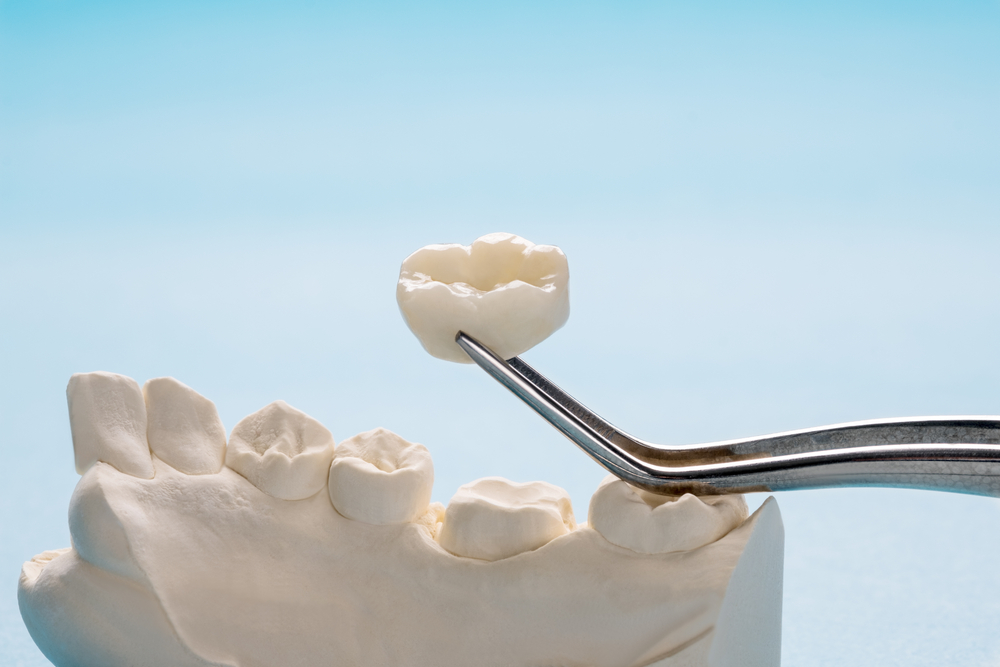

A dental crown is a custom covering that fits over the visible part of a tooth to restore shape, surface, and structure. Dentists use crowns in several treatment plans, including repairing damaged teeth and supporting bridges. They also select materials based on the tooth’s location and treatment goals; options include porcelain and ceramic. Here’s more information about dental crowns and their role in restorative dentistry:
Understanding Dental Crowns
Dental crowns cover a tooth when a filling or bonding treatment does not provide sufficient coverage. This treatment creates a new outer layer on the prepared tooth, and it helps restore its form. Dentists may recommend a crown when a tooth has lost structure due to wear, fracture, decay, or prior dental work.
Crowns are shaped to match adjacent teeth, so they fit within the bite and support normal function. In restorative dentistry, a crown does more than cover a tooth; it also helps maintain tooth structure and proper function within the mouth. Some crowns serve as single restorations, while others are part of a broader treatment plan, making them a versatile solution.
Reviewing Crown Materials
Dental crowns are made from several materials, and each one offers different benefits. The right option depends on the tooth location, the amount of visible structure, and the purpose of the restoration. Porcelain and ceramic crowns are widely used in visible areas because they closely match natural tooth color. The dentist will review the tooth’s location, the demands placed on it, and the design of the restoration before choosing the most appropriate option.
Restoring Damaged Teeth
One common use of a dental crown is to restore a damaged tooth. When a tooth is cracked, broken, worn down, or weakened by a large filling, a crown can provide the broader coverage needed to rebuild its structure. The crown fits over the prepared tooth, and it creates a more complete surface for daily use.
A tooth with limited remaining structure may need more support than a smaller restoration can provide. In this situation, a crown helps protect the prepared tooth and restore its shape. Dentists also place these caps after some root canal treatments, especially when the tooth needs full coverage to complete the restoration.
Supporting Bridge Restorations
A bridge replaces one or more missing teeth by using nearby teeth as anchors. In a traditional bridge, the teeth on each side of the space receive crowns, and those crowns hold the replacement tooth in place. This design restores spacing and supports bite alignment. It also relies on precision, since the crowned teeth must work together as one connected unit. Fit, shape, and placement are all significant.
A bridge may include several carefully planned parts:
- Crowns on the supporting teeth
- A replacement tooth between them
- A design that matches the surrounding bite
- Materials selected for function and appearance
Consult an Experienced Dentist
Dental crowns serve several clear roles in restorative dentistry, including protecting damaged teeth and supporting bridges. They also come in different materials to match various treatment needs. A dentist can evaluate your condition and determine whether a crown is appropriate; this helps make sure the treatment plan is tailored to your specific oral health needs and long-term function. Schedule an appointment with your dentist today to discuss your options.