
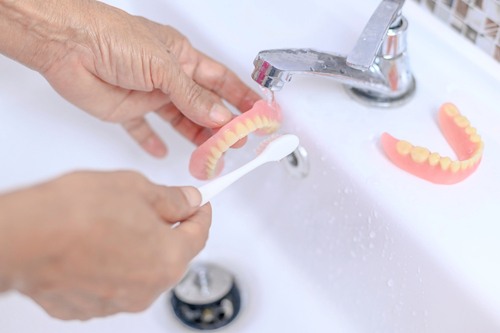

Dentures are a removable prosthetic replacement for missing natural teeth and the surrounding connective tissues within the mouth, used to restore basic eating functions. Complete dentures replace an entire upper or lower arch of natural teeth within the mouth, and partial dentures rest securely on a metal framework attached directly to the remaining healthy teeth. Because these custom dental appliances operate the same as teeth, daily maintenance prevents bacterial growth.
Clean After Eating
Good particles often accumulate underneath dentures during meals. Upon finishing a meal, individuals should extract the prosthetic appliance for proper cleaning. A soft-bristled denture brush removes debris from the prosthesis, and a mild soap or denture cleaner can be used on the resin. Afterward, individuals can replace the prosthesis for continued use.
Standard toothpaste can create scratches across the resin covering the prosthetic, so dental professionals recommend non-abrasive liquid cleaners instead. Lukewarm tap water is usually sufficient to wash away soap residue from the artificial tissue. If the acrylic teeth are scrubbed too vigorously, the friction can degrade the artificial enamel. Cleaning dentures should be gentle, using soft brushes and simple cleaners.
Soak Overnight
The acrylic structural base requires moisture to retain its shape, and dry conditions can cause permanent warping over time. Whether an individual uses a soaking solution overnight to dissolve stains, room-temperature water offers an acceptable alternative for overnight storage. Patients should avoid exposing the prosthetic materials to excessively hot water destroys the structural integrity of the denture base. Freezing temperatures can cause the dentures to become brittle and can cause them to crack. Moderate temperatures are recommended.
Handle With Care
Since wet dentures may become slippery and fall during cleaning, care should be taken while handling the prosthetics. Filling the sink basin with several inches of water offers a layer of protection against accidental drops. The thin metal clasps attached to partial units may bend under pressure, but careful handling prevents structural distortion.
If a patient detects a crack in the acrylic base, they should contact their dental provider for immediate resin repairs. Individuals are discouraged from attempting to fix dentures on their own, as standard glues usually contain toxic chemical compounds. An attempt to fix the prosthesis could result in irreparable damage. A fractured denture plate is repaired by a laboratory technician in a controlled environment.
Routine clinical adjustments keep the prosthetic appliance secure against a patient’s palatal tissues. Natural bone loss alters the jaw structure over periods of time, so loose dentures may slip uncomfortably during conversations or eating. When a licensed professional refits the interior acrylic base to match your changing oral anatomy, the fixture does not move or create painful sores. Patients should seek comprehensive professional dental examinations at least once a year to monitor these changes.
Learn to Maintain Your Dentures
After receiving dentures, individuals should develop a habit of regular cleaning. Proper cleaning promotes long-term oral health, and denture care keeps the prosthesis working well. These methods are helpful for individuals to have a comfortable experience while using dentures. Contact a dentist for more information about maintaining dentures.