
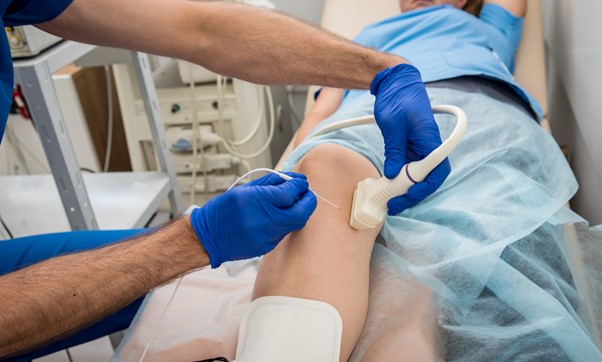

Varicose veins are enlarged veins that typically appear in the legs. They occur when weakened or damaged valve structures allow blood to pool instead of flowing efficiently back toward the heart. This leads to increased pressure within the veins and visible swelling or bulging. When exploring treatment options, individuals may encounter both surgical and non-surgical approaches; non-surgical care includes methods like compression therapy. Here are several options for treating varicose veins without extensive surgery:
Understanding Compression Therapy
Compression therapy is one possible starting point when treating varicose veins; it involves wearing stockings that apply steady pressure to the legs. This pressure supports vein function. Compression therapy is often included in a broader treatment plan.
A provider may recommend a specific stocking strength, length, and fit. Proper sizing is key, so measurements are usually taken before use. You may also receive instructions on when to wear the stockings, how long to keep them on during the day, and how to replace them over time. Compression therapy is a practical option because it does not involve incisions, injections, or implanted devices. It can work well when used consistently and as directed.
Reviewing Endovenous Ablation
Endovenous ablation is a minimally invasive procedure that uses heat to close a targeted vein. Two common methods are laser ablation and radiofrequency ablation; both follow a similar process and may be done in an outpatient setting. During the procedure, the provider uses imaging to map the vein and guide treatment. They place a small catheter into the vein, and controlled heat is delivered through the device. The treated vein is then closed, causing blood flow to be redirected through other veins. This option is more procedural than compression therapy, but it still falls within the non-surgical category because it does not involve traditional open surgery. After treatment, the provider may recommend follow-up visits, compression use, and activity instructions.
Exploring Ovarian Vein Embolism
Ovarian vein embolism is another catheter-based, non-surgical procedure. It is generally discussed when a provider identifies vein-related issues involving the pelvic veins, including the ovarian veins. During ovarian vein embolism, the provider accesses the vein through a catheter and places materials such as coils or other embolic agents to close the targeted vein. Imaging guides the placement throughout the procedure.
The goal of this treatment is to block flow in the selected vein and redirect circulation through other pathways. It differs from compression therapy and endovenous ablation because it focuses on pelvic veins rather than surface leg veins alone. It may be recommended after detailed imaging and specialist review.
Find Treatment for Varicose Veins
Non-surgical options each serve a different role; compression therapy is external and routine-based, and endovenous ablation targets specific surface veins through heat. Ovarian vein embolism focuses on selected pelvic veins through catheter-guided closure. The right path depends on the location of the vein issue, the imaging findings, and the overall treatment plan. If you are exploring non-surgical options for varicose veins, schedule a consultation with a qualified vein specialist and prepare a clear list of questions about each approach.