
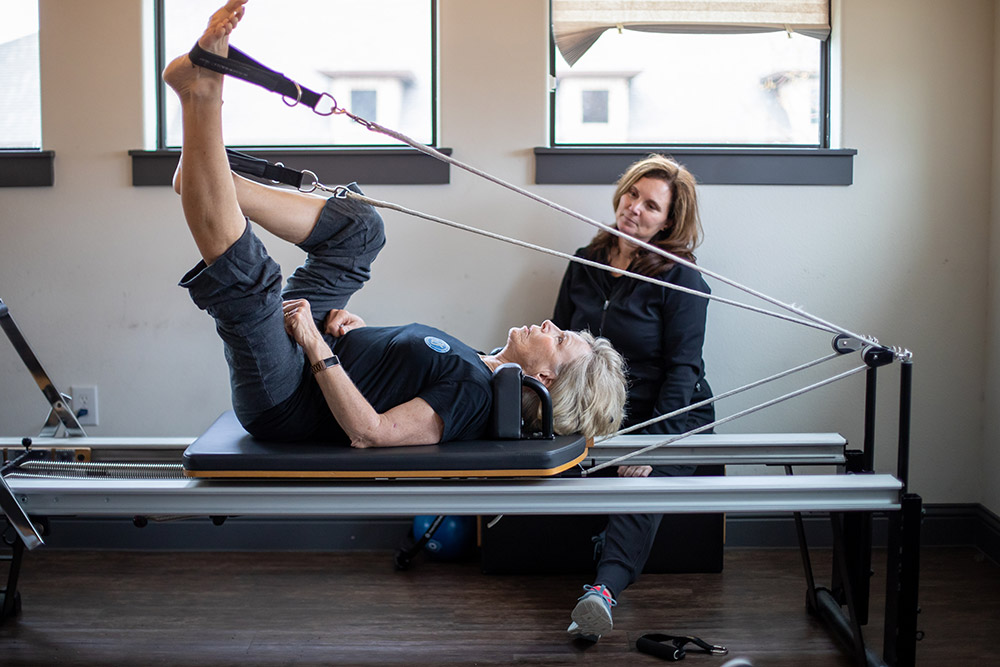

Back pain can build up during long hours at a desk. Small movements help, and better setup choices aid back pain relief. If pain is frequent, these exercises may help while you work. Professional care may guide next steps.
What Improves Posture?
Sit with your feet flat and your knees level with your hips. Your chair should support your lower back, and the seat should not press behind your knees. If your chair lacks support, add a small cushion while you work. Keep your weight evenly distributed between both hips. Avoid crossing your legs for long periods, because that can shift your pelvis and strain it. Check your posture during the day to reset before tension builds.
Gently lift your chest, and let your shoulders drop. Keep your head over your shoulders, but avoid pushing your chin forward. Keep your screen about an arm’s length away. Place your keyboard and mouse close together, and keep your elbows near your sides. Rest your wrists in a neutral position while typing. Keep your mouse near the keyboard, and avoid reaching forward for either device.
Which Stretches Help?
Some stretches for back pain relief may include:
- Shoulder rolls: Lift, roll back, and lower slowly to reduce upper-body tension from computer work.
- Spinal twists: Keep your hips forward and rotate gently through your upper body on each side.
- Hamstring stretches: Extend one leg, hinge at your hips, and keep your back long to stretch safely.
- Chest openers: Open the front of your body without forcing your lower back into a deep arch.
Start with a seated shoulder roll. Lift your shoulders, move them back, and then let them drop slowly. Repeat the motion as needed. Move slowly, and keep your breathing steady as your shoulders relax. If you rush the stretch, your neck can tighten instead of easing. Next, try a seated spinal twist. Sit tall, place one hand on your opposite knee, and rotate gently. Hold for a few breaths, and switch sides when the stretch is even. Keep your hips facing forward during the twist. Rotate through your upper body, but do not force the movement. To stretch your hamstring, extend one leg forward. Hinge at your hips, and keep your back long as you lean. If the stretch is sharp, stop because pain should not increase.
Which Movements Help?
Use brief movement breaks every hour of sitting, since this can limit pain. Stand up, walk a short distance, and reset your posture before sitting again. These breaks are short, but they change joint position. They may provide back pain relief. Try seated pelvic tilts to wake your lower back. Rock your pelvis forward and back, and keep the motion small and smooth. A smooth pattern helps you move without adding extra tension. Keep your core lightly engaged during the march. Sit tall, and avoid leaning back too far as you lift each leg. Move with control, and stop if symptoms travel down your leg. Massage therapy, acupuncture, and pain management may also support care.
Start Back Pain Relief Today
Use these exercises during the workday, and pair them with better desk setup choices. Check your chair, desk, monitor, keyboard, mouse, laptop, and telephone today. If pain persists, seek an evaluation. Ergonomics and clinical care can help guide a safer plan, while limiting back pain.