
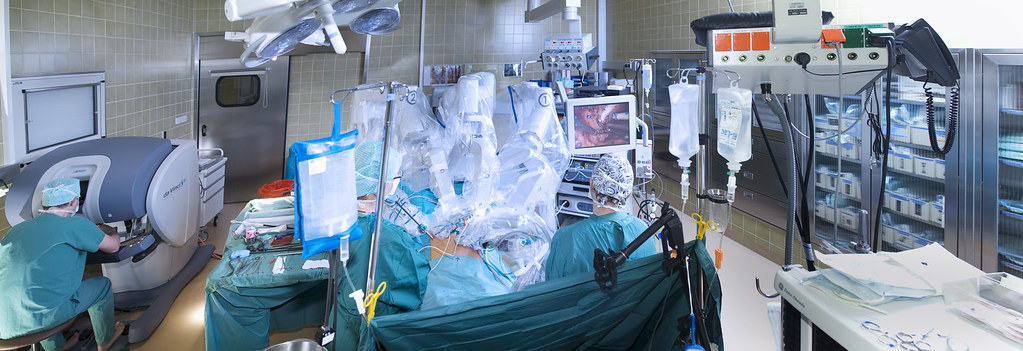

Da Vinci surgery, which is widely used in gynecology, is a robot-assisted surgical system employed in several medical procedures. A surgeon operates small instruments and a high-definition camera from a nearby console, and the procedure is not performed directly at the bedside. The system translates the surgeon’s hand movements into precise internal motions through small incisions. Here are some things to know about robot-assisted surgery:
How Does Da Vinci Surgery Work?
Understanding the Da Vinci surgical system helps explain its precision and benefits in surgical procedures. At the beginning of the operation, the surgical team places a few small ports in the body that serve as insertion sites. The surgeon uses miniature instruments, and the camera sends magnified, three-dimensional images to a viewing screen. A surgeon guides the system’s arms in real time from a seat at a console in the operating room.
The robot does not act on its own. Every movement comes from the surgeon, whose hand motions are translated into smaller, steadier actions at the instrument tips. This allows detailed work in tight spaces, and it is one reason the system is used for delicate procedures in the pelvis.
During the operation, the bedside team assists with instrument changes, patient positioning, and other tasks. Anesthesia is still used, and the overall process follows the same safety steps as other forms of minimally invasive surgery. This allows Da Vinci surgery to combine a surgeon’s judgment with advanced tools designed for control and visibility.
What Are the Benefits?
Minimally invasive robotic surgery offers several advantages that enhance patient outcomes and recovery experiences. Smaller incisions are a key feature of Da Vinci surgery; this usually means less blood loss during surgery and a shorter hospital stay compared to open surgery. Recovery details still vary based on the procedure, the patient’s health, and the reason for surgery.
Better visualization is another advantage. The surgeon sees a magnified 3D view of the surgical area, which helps with tissue identification and precise dissection. The wristed instruments also move more precisely than laparoscopic tools, and this gives the surgeon more range of motion.
What Is It Used For?
In gynecology, Da Vinci surgery can be used for several procedures. They include:
- Hysterectomy: A hysterectomy is the removal of the uterus. This can be a total hysterectomy, which removes the uterus and cervix, or a supracervical hysterectomy that leaves the cervix intact. The Da Vinci system allows precise movements, and this is beneficial for navigating around the bladder and bowel.
- Myomectomy: This procedure removes uterine fibroids while preserving the uterus. Robotic assistance helps the surgeon carefully cut out the fibroids and repair the uterine wall, so women can maintain their fertility.
- Endometriosis Resection: This surgery removes endometrial-like tissue that has grown outside the uterus. The enhanced visualization and dexterity of the robotic arms allow the surgeon to excise implants while minimizing tissue damage.
- Sacrocolpopexy: This procedure corrects the descent of pelvic organs, such as the bladder or uterus. The surgeon uses robotic systems to attach a piece of surgical mesh to the sacrum, lifting and supporting prolapsed organs.
- Gynecologic Oncology: Robotic surgery treats some gynecologic cancers, and it can be used for lymph node dissection and staging procedures. This offers a minimally invasive option for cancer treatment.
Talk to a Gynecologic Surgeon.
If Da Vinci surgery has been mentioned as part of your care, ask questions about the procedure’s goals, the planned approach, and the expected recovery process. Clear information helps you compare options and make a decision based on your diagnosis. To determine if robot-assisted surgery meets your needs, schedule an appointment with a gynecologic surgeon today.