

Elbow pain can interfere with simple daily tasks, from lifting a coffee cup to typing on a keyboard. It often develops from overuse, repetitive motion, or injury to the tendons and muscles around the joint. Recovery usually takes a steady, structured approach rather than rest alone. The right combination of gentle movement, progressive strengthening, and medical support can restore function and reduce discomfort over time.
Stretches
Stretching can help alleviate elbow pain. Stretching helps restore range of motion and eases the stiffness that builds up when a joint is used less than usual. Gentle stretches should be slow and controlled, never forced into pain.
A common starting point is the wrist flexor stretch. This stretch involves extending one arm forward with the palm up, then gently pressing the fingers downward with the opposite hand. Follow that with a wrist extensor stretch. The arm should turn so that the palm faces up, and the opposite hand stretches the fingers back. Both stretches target the muscles that attach near the elbow and contribute to conditions like tennis elbow and golfer’s elbow.
Holding each stretch for about 20 to 30 seconds allows the tissue to lengthen safely. Repeating the routine two or three times a day can support steady progress. Stretching should produce a mild pull, not a sharp sensation. Any increase in pain signals that the movement needs to be reduced or paused.
Strength Training
Once basic motion returns and pain settles, strength training becomes the next focus. Building strength in the forearm and surrounding muscles helps protect the joint and lowers the risk of repeat injury. The key is progression. Light resistance comes first, with gradual increases only as the joint tolerates more.
Isometric exercises are a useful starting point. These involve contracting a muscle without moving the joint, which builds strength while limiting strain. A simple example is pressing the palm against a stable surface and holding for several seconds.
Eccentric exercises form the next stage. These focus on the slow lowering phase of a movement, which has been shown to help tendon recovery. A wrist curl with a light dumbbell is one option, where the weight is raised quickly and lowered slowly. Resistance bands also allow controlled strengthening across a range of angles.
Progress should be tracked carefully. Adding weight too soon can aggravate healing tissue and delay recovery. A measured pace remains the safest path toward lasting strength.
Medical Options for Elbow Pain
When stretching and strengthening do not fully resolve symptoms, medical options may support recovery. These approaches range from conservative care to specialized procedures.
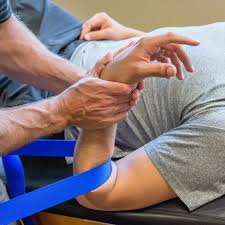
Physical therapy is often recommended for guided rehabilitation. A therapist can design a program tailored to the specific cause of pain and adjust it as healing progresses. Bracing or splinting may also reduce strain on the joint during daily activity.
For persistent inflammation, a physician might suggest anti-inflammatory medication or a corticosteroid injection to reduce inflammation in the affected area. When conservative care does not provide relief, surgery may be considered to repair damaged tendons.
Reach Out to an Orthopaedic
If your elbow pain has lasted several weeks or continues to limit your daily activity, it may be time to see an orthopaedic specialist. Start by scheduling an evaluation to identify the source of your symptoms. An orthopaedic specialist can examine the joint, recommend imaging if needed, and build a recovery plan suited to your situation.