
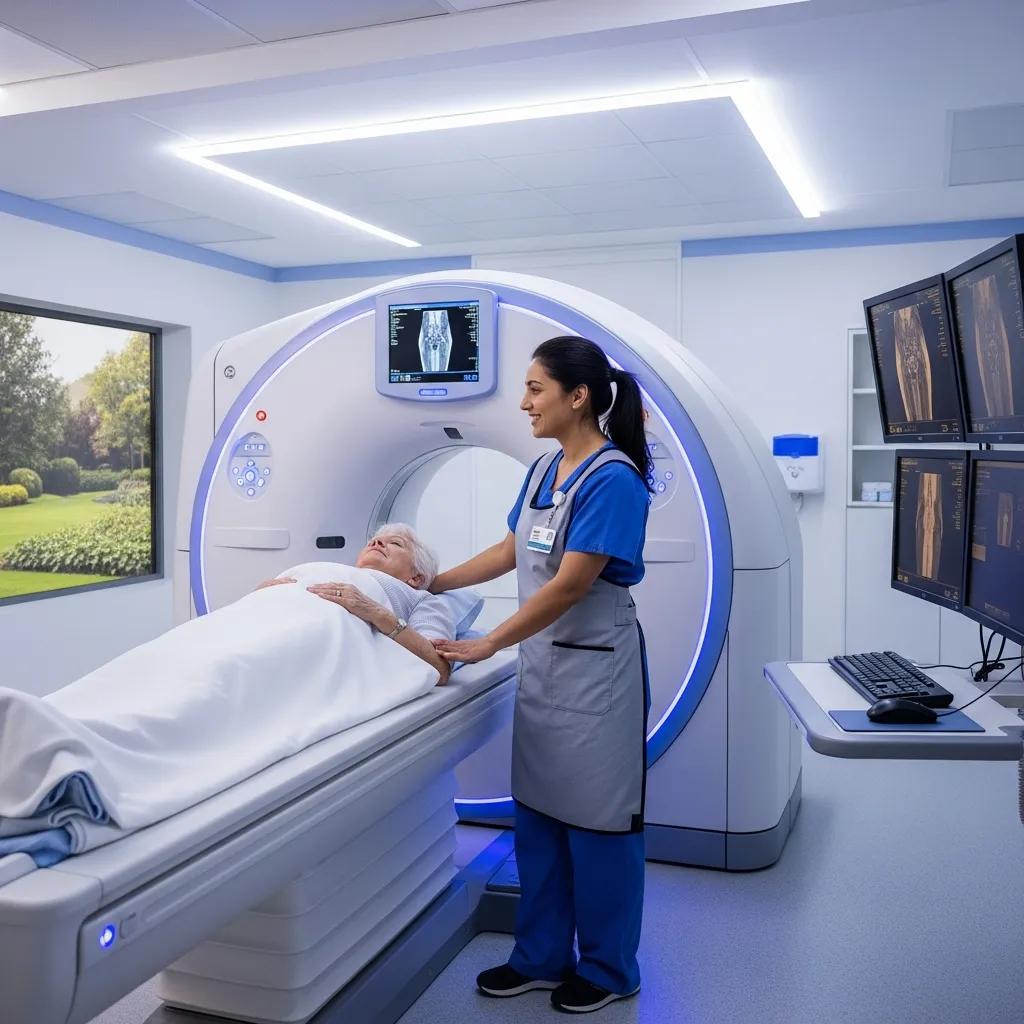

A computerized tomography scan, or a CT scan, is a standard imaging procedure used by medical professionals to view the internal structures of the body. Patients scheduled for this exam can have questions about the process and ask what steps they need to take beforehand. Being well-informed about the procedure provides clarity, helping make the experience efficient.
What Is a CT Scan?
A CT scan utilizes advanced X-ray technology combined with computer processing. Traditional X-rays produce flat, two-dimensional pictures of bones, but this advanced scan creates detailed, cross-sectional slices of the body. These slices combine to form three-dimensional views of internal structures, such as bones, organs, blood vessels, and soft tissues.
During the procedure, the patient lies flat on a specialized motorized table. This table slowly glides through a large, circular opening in the scanner. As the table moves, an X-ray tube rotates around the patient and captures multiple precise images from different angles. A computer then compiles these images to map out the targeted anatomy.
The process is generally painless and noninvasive. During the scan, patients might hear buzzing or whirring noises from the equipment. The technologist operates the machine from an adjacent room, but they maintain constant visual and audio contact through a two-way intercom system.
What Can It Detect?
Medical providers request these scans for a variety of diagnostic reasons. The detailed three-dimensional pictures reveal physical abnormalities that plain X-rays might miss. Physicians use the resulting images to evaluate and monitor numerous health conditions without needing exploratory surgery. The technology helps locate muscle disorders and bone fractures resulting from trauma; it also assists in identifying the specific location of blood clots and masses such as tumors. Doctors rely on these scans to track the progression of specific diseases, including cancer, heart conditions, and lung disorders.
How Do You Prepare?
Preparing for the exam involves a few basic steps, but the exact requirements depend on the specific part of the body being scanned. Patients must typically remove any metal objects before entering the scanning room. Items like jewelry, belts, glasses, and dentures can interfere with the imaging equipment, potentially causing blurred pictures. The technologist will also ask you to change into a hospital gown.
The scan may require a contrast dye to highlight specific tissues, blood vessels, or organs. When contrast material is part of the procedure, the facility can instruct patients to refrain from eating or drinking for several hours before the appointment. At certain points during the scan, the technologist might ask the patient to hold their breath for a few seconds, and staying completely still prevents movement from blurring the final pictures.
Seek Professional Radiology Services
The technologist operating the machine does not provide the final diagnosis, sending the data instead to a specialized physician known as a radiologist. The radiologist carefully analyzes the cross-sectional pictures and generates a comprehensive written report. This detailed report goes directly to the referring physician, who then discusses the findings and any necessary next steps with the patient. Contact a radiology facility to schedule your appointment.