
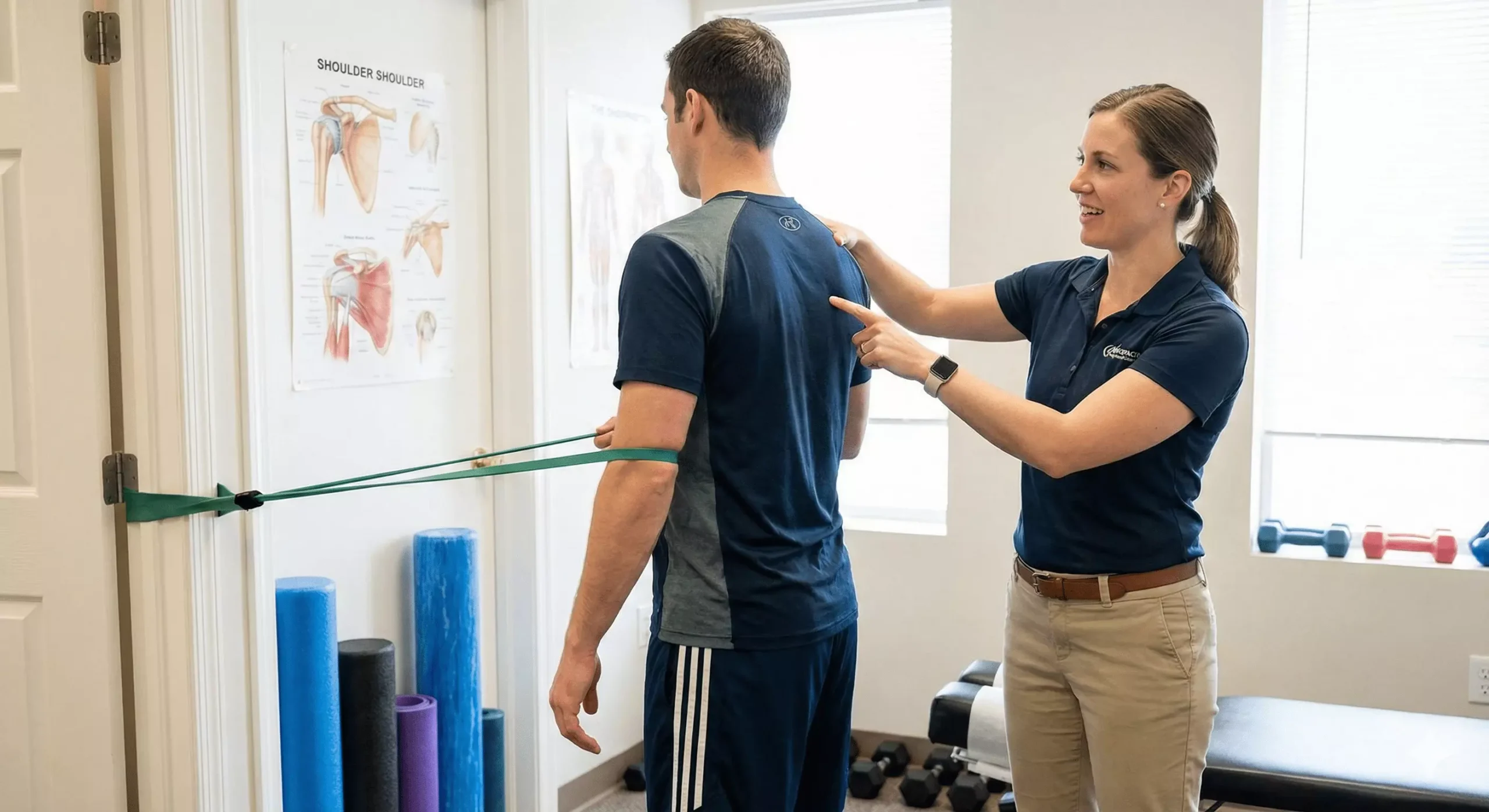

A rotator cuff tear is a rupture in one or more of the four tendons that connect the shoulder muscles to the upper arm bone. These tears range from partial, where the tendon is frayed but intact, to full, where it separates completely. Rotator cuff tears can result from acute injury, such as a fall, or from gradual wear over time. Recovery involves a structured sequence of rehabilitation techniques that address immobilization, joint stabilization, and strength coordination.
Joint Immobilization
After a rotator cuff tear, the shoulder is typically placed in a sling to limit movement while early tissue healing occurs. Because uncontrolled motion at the repair site can disrupt healing of the tendon, the arm is kept in a position that reduces tension on the repair. Rest during this phase often includes gentle pendulum exercises that are introduced early to maintain circulation and prevent stiffness in the lower joints.
The duration of immobilization depends on the severity of the tear and whether surgery was performed. A full tear treated surgically may require four to six weeks in a sling, while a partial tear may need less time. The treating clinician sets the immobilization timeline, and that timeline shapes what comes next in the rehabilitation process.
Simple Stabilization
Once immobilization ends, the focus shifts to reactivating the muscles that stabilize the shoulder blade and joint. Scapular exercises and muscle contractions are often introduced, as they increase strength without moving the tendon through a full range. The shoulder functions as a chain, so scapular stability affects nearly every upper limb movement that follows. Without it, later strengthening exercises may place an uneven load on the repaired tissue.
Strength Coordination
Active range-of-motion exercises occur later, with movements guided by a physical therapist to stay within safe limits. The shoulder is usually taken through forward flexion, external rotation, and abduction in relation to the healing tendon’s load tolerance. Resistance is introduced gradually, starting with light bands and progressing to free weights as tissue strength increases.
Rotator cuff strengthening targets the individual muscles before combining them in functional patterns. Side-lying external rotation, prone Y and T exercises, and standing cable rows are commonly used because they load the cuff in ranges where it is most active. Each exercise is performed with a controlled tempo to limit compensatory movement from larger muscles. These exercises increase the strength of the muscles that may have weakened during immobilization.
Proprioceptive exercises, such as rhythmic stabilization and closed-chain weight-bearing drills, retrain the shoulder’s position. Since the injury often disrupts feedback from the joint, these drills address a deficit that strength work does not cover. Progress through this phase is measured by pain levels, range of motion milestones, and performance on standardized shoulder function tests.
Begin Rotator Cuff Tear Therapy
Rotator cuff tear rehabilitation follows a defined progression. Each phase builds on the last, and staying in the same phase long enough prepares patients for the next one. If you have shoulder pain and believe it may be a problem with your rotator cuff, contact a specialist to schedule an evaluation. Whether the injury occurred during an athletic event or during normal activity, a proper evaluation can aid in recovery.